Photo: Terabass, CC BY-SA 3.0, via Wikimedia Commons
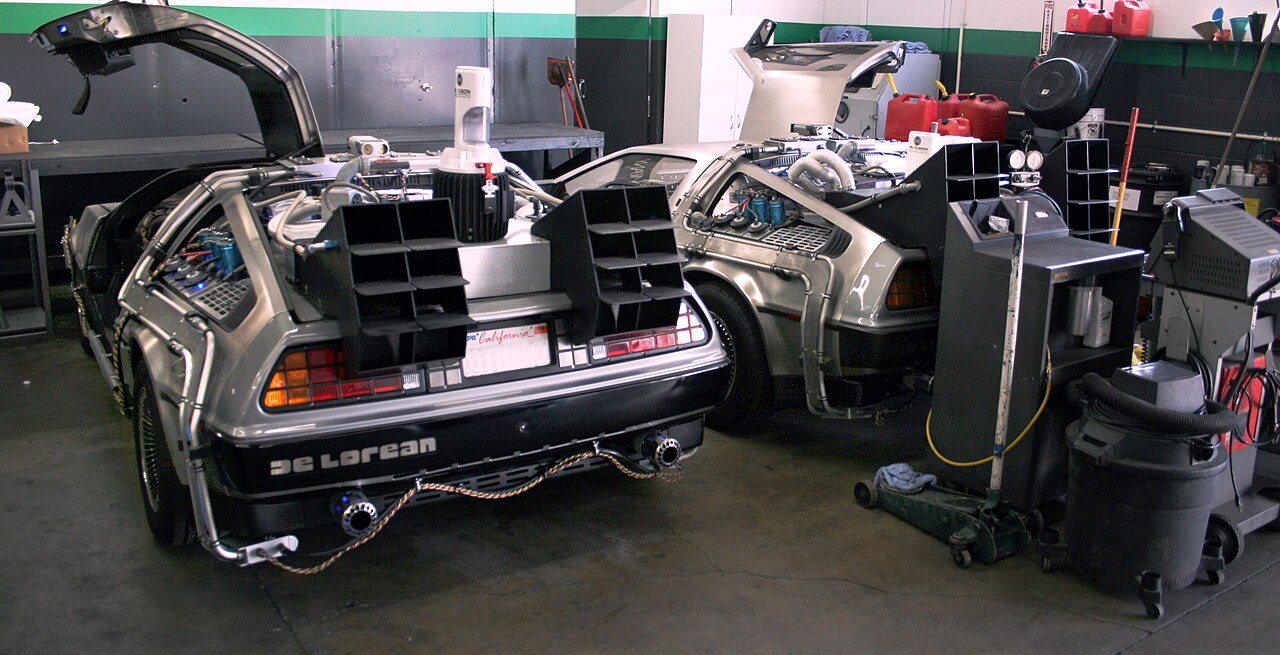
Type 10/21/2015 into the time circuits of a DeLorean and you land in a Hill Valley with flying cars, a holographic shark and a kid on a hoverboard. That was the future Robert Zemeckis and Bob Gale imagined for Back to the Future Part II, which reached American cinemas in November 1989.
The date on the dashboard has since come and gone. October 21, 2015 was a Wednesday, and so is today, which is exactly the kind of coincidence Doc Brown would make a speech about. Eleven years after the real Back to the Future Day, it seems a fair moment to check the film's homework.
My bias, for the record: I think Part II is the most fun of the three films, even if the first one is the better movie. That opinion has started more than one argument over dinner.
How October 21, 2015 became a date people remembered
The plot sends Marty McFly (Michael J. Fox) and Doc Brown (Christopher Lloyd) thirty years forward from 1985 to sort out a problem with Marty's future children. The writers needed a specific day for the time circuits to display, and October 21, 2015 is what ended up on screen.
For most of the next 26 years that was a piece of movie trivia. Then the real date started getting closer and the internet did what it does. Doctored pictures of the dashboard showing "today" as the arrival date went around for years beforehand, catching people out over and over.
When the actual day arrived, it turned into a small worldwide party. Cinemas ran the trilogy back to back, brands rushed out tie-ins, and Fox and Lloyd turned up together in character on late-night television. I can't think of many fictional dates that got that kind of treatment.
The predictions that came true, more or less
The film's best guesses were the boring ones, which is usually how futurism goes.
In the 2015 scenes, the McFly family has a big flat screen on the wall showing several channels at once. The grown-up Marty takes a video call from his boss, with the caller's details popping up beside his face (the call goes badly, and a fax confirms it). Front doors open with a thumbprint, and the police identify someone by scanning her thumb with a handheld device.
All of that exists now in some form. Wall-mounted flat screens are ordinary, split-screen viewing is built into plenty of sets, video calls became a daily habit for millions of people around 2020, and fingerprint readers sit on most phones. None of it looks the way the set designers drew it, but the ideas were sound.
The McFly kids also wear goggle-style headsets at the dinner table to watch TV and take calls. Smart glasses and headsets have been chasing that picture ever since, with mixed results, and I'm not convinced the dinner-table version is something anyone should want.
The hoverboard question
The prop everyone wanted was the pink hoverboard. Zemeckis fed the fantasy himself, joking in a promotional featurette at the time that hoverboards were real and kept off the market by worried parents' groups. A lot of children took him at his word.
The real world did try. In 2015 Lexus showed a board called the Slide that used superconductors, cooled with liquid nitrogen, to float over a specially built magnetic track. A company called Hendo had raised money on Kickstarter the year before for a board that hovered over copper and other conductive surfaces. Both worked, after a fashion, and neither was something you could ride down the high street.
The self-balancing scooters that went on sale around the same time got called "hoverboards" anyway, despite having their wheels firmly on the ground. That strikes me as a technicality, and I'm choosing not to accept it.
Nike laces and a bottle of Pepsi
The other object that stuck in a generation's memory was Marty's pair of self-lacing Nike sneakers. Nike first produced a replica Nike Mag in 2011, without the power laces, and sold it to raise money for the Michael J. Fox Foundation for Parkinson's research.
On Back to the Future Day itself, Nike presented Fox with a pair that did lace themselves. The company followed up in 2016 with a small run of self-lacing Mags, again tied to fundraising for the foundation. So one of the film's sillier gadgets became real largely because fans wanted it and an actor's charity could use the money.
Pepsi joined in as well. The film's "Pepsi Perfect" was a joke about over-engineered soft drinks, and in 2015 the company put out a limited run of bottles styled after it. They sold out fast. I'd bet a good number of them are still sealed on collectors' shelves.
Where the movie missed by a mile
Flying cars are the obvious miss. Hill Valley's sky lanes look no closer today than they did in 1989, unless you count a handful of prototype air taxis that most of us will never sit in.
The McFly house of 2015 also has fax machines in it, which is a nice reminder that the filmmakers were writing from 1989 and couldn't help it. Jaws 19, playing in 3D at the local cinema, never got made, though Universal had some fun with a mock trailer when the real date came round.
Then there is baseball. In the film, the Chicago Cubs win the 2015 World Series. In the real 2015, the Cubs reached the National League Championship Series and were swept by the New York Mets, with the deciding game played on October 21 of all days. A year later the Cubs won their first World Series since 1908. Off by twelve months, which by Hollywood standards is pretty close.
Rewatching it today
If you want to mark the day, the trilogy is easy to find on streaming and on disc, and Part II is worth a second look now that you can hold its gadgets up against the ones in your pocket. Watch the backgrounds in the café and the McFly house, since that is where most of the predictions are hiding.
The film was never trying to forecast anything with a straight face. It was a comedy about a teenager and an eccentric scientist, and the futurism was mostly set dressing. That it got video calls and flat televisions right while missing flying cars by a mile makes it more fun to watch now, and I'd still trade every one of my gadgets for a hoverboard that works on pavement.
Enjoyed this story?Get a new one every day on social.