Photo: Ed Solero, CC BY 3.0, via Wikimedia Commons
On Thanksgiving Day 1942, November 26, a Warner Bros. picture called Casablanca opened at the Hollywood Theatre on West 51st Street in Manhattan. It was not supposed to be out yet. The studio had planned a release for the following year, but on November 8 Allied troops landed in French North Africa, and within days the city of Casablanca was in Allied hands and in every newspaper in the country. Warner Bros. had a film with that exact name sitting finished on the shelf. It did the obvious thing.
So one of the most quoted American movies ever made began life as a bit of opportunism, one theater, one city, cashing in on the headlines. The wide release came on January 23, 1943, and the studio got lucky twice: Roosevelt and Churchill had just met at the Casablanca Conference, and the city was in the papers again.
I find that origin oddly comforting. Nobody at Warner thought they were making a masterpiece. They thought they were making the next picture on the schedule.
A play nobody had produced
The film started as a stage play, Everybody Comes to Rick's, written by Murray Burnett and Joan Alison. It had never been staged. Warner Bros. bought it in late 1941, and producer Hal B. Wallis renamed it Casablanca, reportedly with an eye on the success of Algiers a few years earlier.
The screenplay went through several hands. Twin brothers Julius and Philip Epstein did much of the dialogue and the wisecracks, Howard Koch worked on the politics and the drama, and Casey Robinson contributed without a screen credit. Michael Curtiz, a Hungarian-born director who had already made a pile of hits for the studio, directed.
There is a story, told for decades, that Ronald Reagan and Ann Sheridan were going to star. It traces back to a studio press item from early 1942. Most film historians treat it as routine publicity rather than a real casting plan, and Wallis seems to have wanted Humphrey Bogart from the start. (I will admit I enjoy picturing the Reagan version, mostly because it is so hard to picture.)
Shooting without an ending
Filming began in late May 1942 on the Warner lot in Burbank, and the script was still being rewritten while the cameras rolled. New pages turned up on set. The ending was not locked when shooting started, and Ingrid Bergman said in later years that she did not know which man Ilsa would leave with, so she played her scenes somewhere in between. That may be a little polished in the retelling, as these stories usually are, but the rewrites themselves are well documented.
The last line of the film did not exist during shooting at all. "Louis, I think this is the beginning of a beautiful friendship" was chosen by Wallis after filming wrapped, and Bogart recorded it weeks later. If you watch closely, his mouth is turned away from the camera when he says it.
The other famous line is one nobody says. There is no "Play it again, Sam" in Casablanca. Ilsa says "Play it, Sam," and Rick later says "You played it for her, you can play it for me." The misquote stuck so firmly that Woody Allen used it as the title of a 1969 play.
The piano player who did not play
Sam was played by Dooley Wilson, a singer and drummer who had worked in clubs in Europe. He did not play the piano. On screen he mimes the keys while the music comes from a studio pianist off camera, and the song he sings, As Time Goes By, was not new either. Herman Hupfeld wrote it in 1931 for a Broadway revue, and it had been in the original play.
According to several accounts, the film's composer, Max Steiner, did not care for the song and wanted to replace it. By then Bergman had cut her hair short for her next role, which made reshooting her scenes impractical, so the song stayed. I can't swear to every detail of that one, but it is too good a near miss to leave out.
The refugees in the crowd
The scene that tends to wreck people is the one in Rick's café where the crowd drowns out a group of German officers by singing La Marseillaise. A lot of the people in that room had personal reasons to sing it. Many of the cast and extras had fled Nazi-occupied Europe themselves.
Madeleine Lebeau, who plays Yvonne, the woman shouting "Vive la France!" with tears on her face, had escaped France in 1940. Conrad Veidt, who plays the German Major Strasser, had left Germany in the 1930s; his wife was Jewish, and he was a fierce opponent of the Nazis who spent his career being cast as one. Marcel Dalio, the croupier, was a French Jewish actor who had also fled. It was filmed in the summer of 1942, when none of them knew how the war would end, and I have never been able to watch it the same way since I learned that.
From a single theater to Best Picture
The reviews were good, not ecstatic. The New York audience at the Hollywood Theatre liked it, the January release did solid business, and then the Academy Awards in March 1944 handed it three Oscars: Best Picture, Best Director for Curtiz and Best Screenplay for the Epsteins and Koch. It had been nominated in eight categories.
Its reputation kept climbing long after that, mostly on television and in revival houses. By the 1970s college audiences were quoting it back at the screen, and when the American Film Institute ranked the greatest American films in 1998, it came second, behind Citizen Kane.
Where to find it now
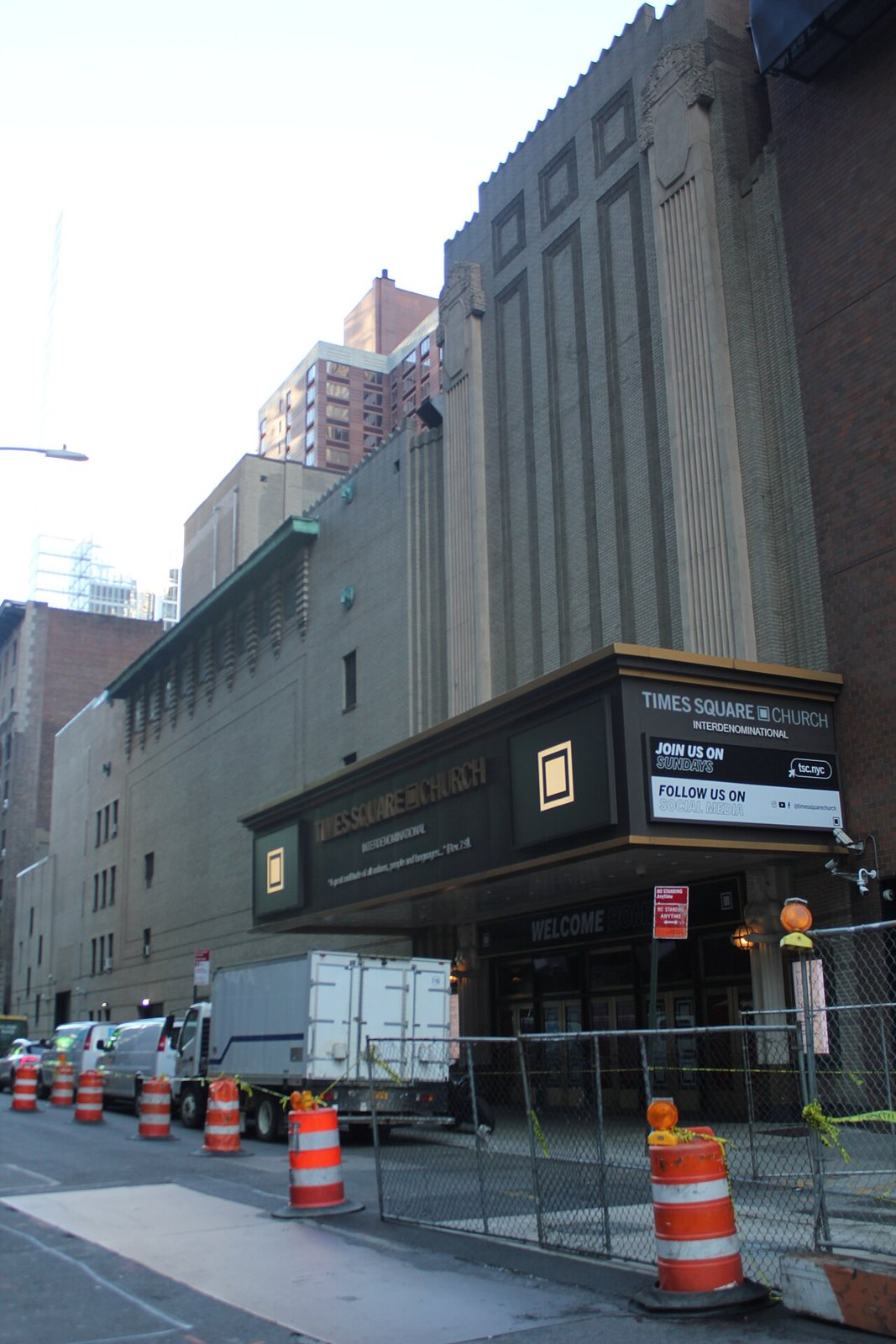
The former Hollywood Theatre on West 51st Street in Manhattan, now Times Square Church, with its tall stone facade and marquee. Photo: Epicgenius, CC BY-SA 4.0, via Wikimedia Commons
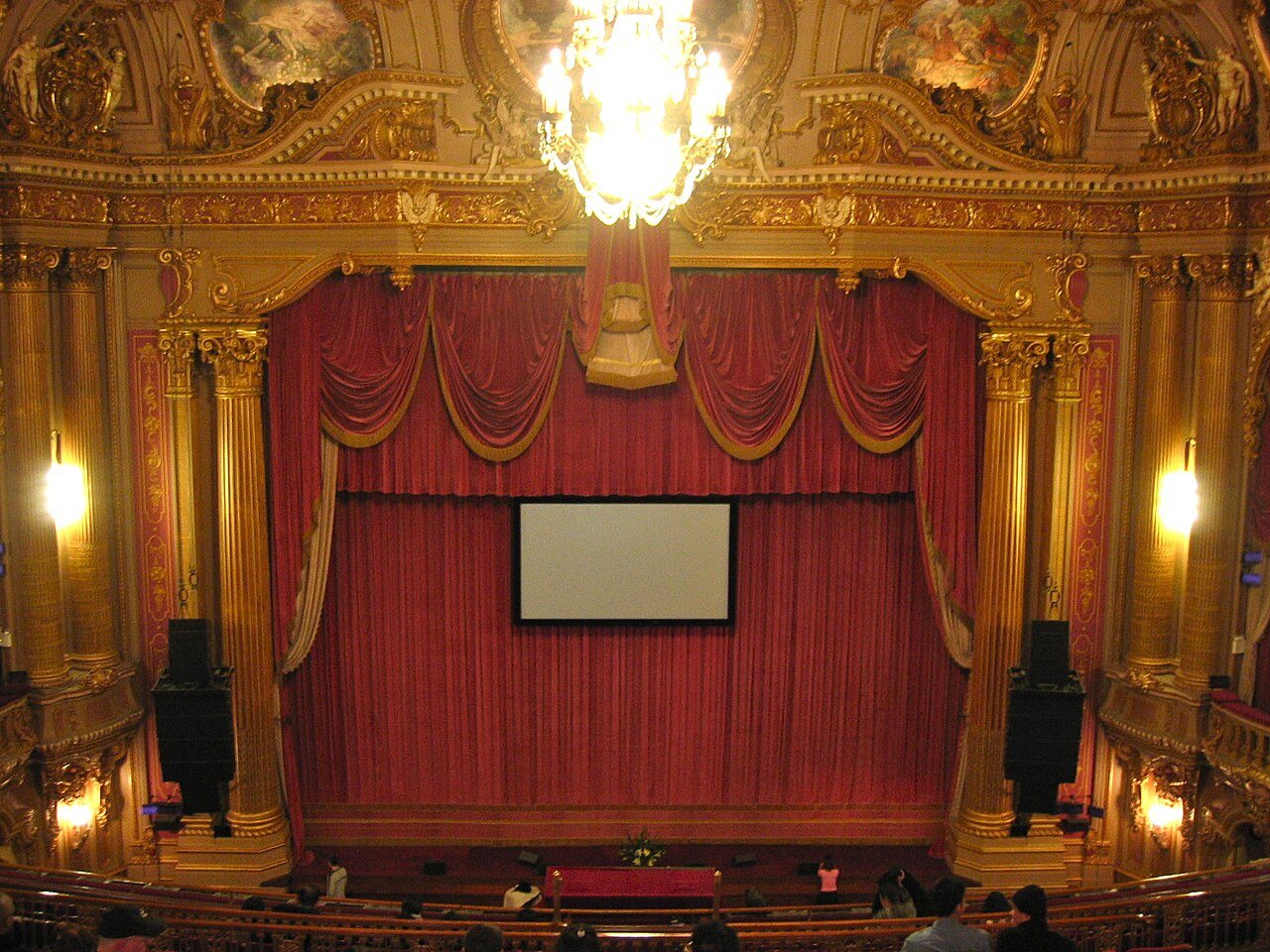
The building where it premiered is still standing. The Hollywood Theatre became the Mark Hellinger Theatre in 1949 and hosted Broadway shows, including the original run of My Fair Lady. Since the early 1990s it has been Times Square Church, and the gilded auditorium is still there behind the marquee.
The film itself is easy to find on streaming and on disc, and it turns up regularly on classic movie channels around the holidays. If you have only ever seen it in clips, it is worth watching straight through once, knowing that the cast was working from pages handed to them that morning and that a lot of the faces in the café crowd had been running from the real thing. And if you watch it today, you will be watching it 84 years to the day after a studio rushed it into a single New York theater because the news gave them an excuse.
Enjoyed this story?Get a new one every day on social.