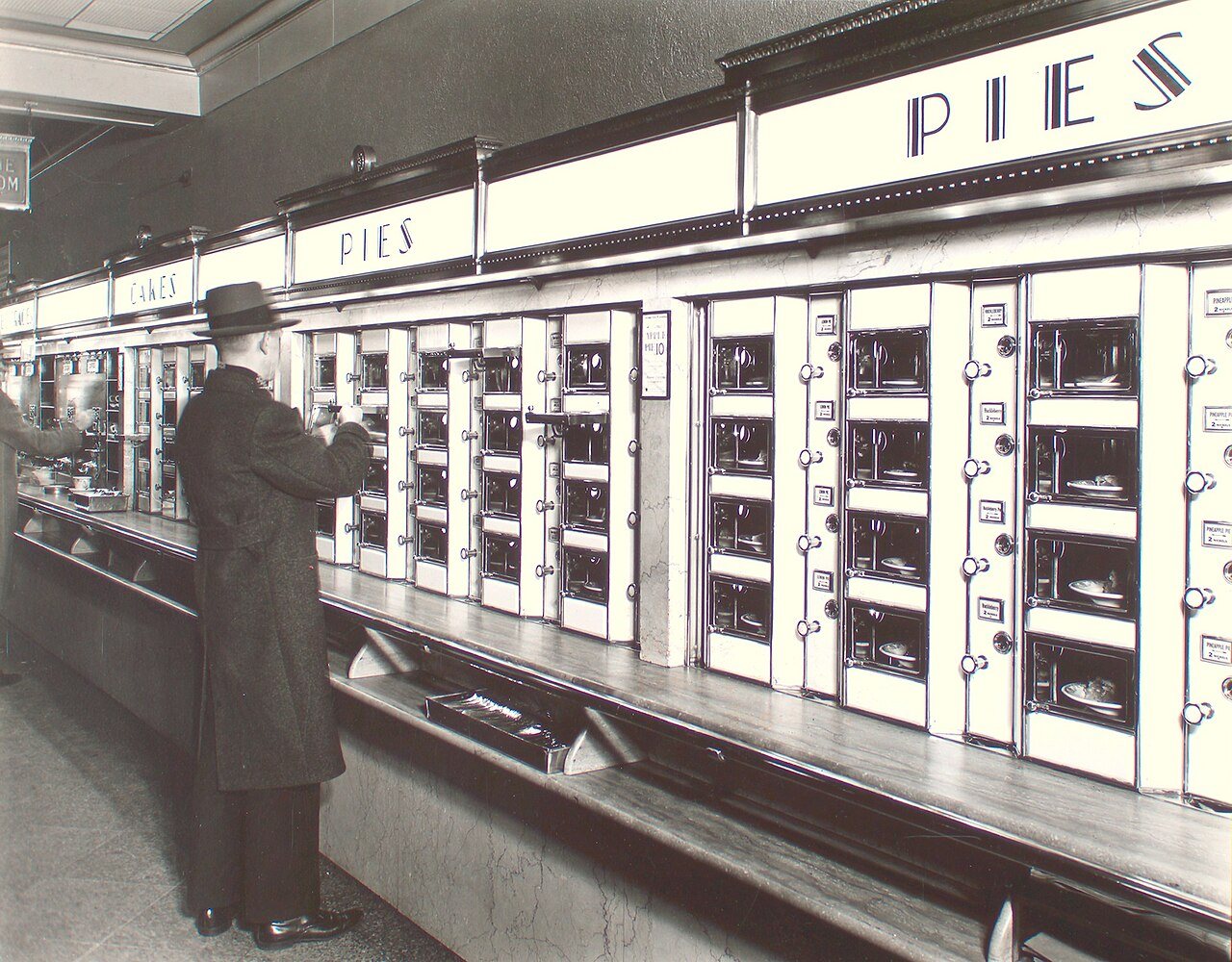
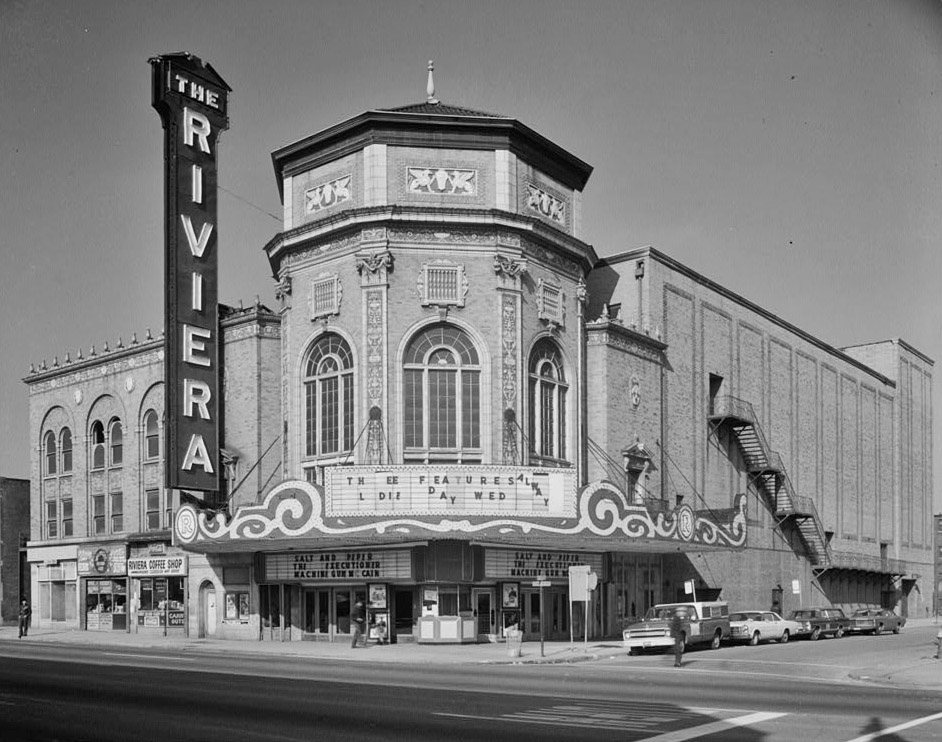
Photo: Berenice Abbott, public domain, via Wikimedia Commons
You walked in with a dollar bill, and a woman in a glass booth slid twenty nickels back across the marble without appearing to count them. Then you walked along a wall of small glass doors, each with a plate behind it: a slice of apple pie, a dish of baked beans, a ham sandwich. You dropped your coins in the slot, turned the knob, and the door clicked open.
That was the Automat. Horn & Hardart ran them in Philadelphia and New York for most of the 20th century, and for a few generations of office workers, students, actors and lonely bachelors, it was simply where you ate.
Berenice Abbott photographed one on Eighth Avenue in Manhattan in 1936 for her series on the changing city, and the picture above gives you the feel of it better than I can. Note the little cards on the right. The pies cost two nickels.
Two partners and a machine from Berlin
Joseph Horn and Frank Hardart had been running a small lunchroom in Philadelphia since the late 1880s. The coin-operated restaurant idea came from Germany, where automatic eating places had already opened, and the partners bought their equipment from a Berlin manufacturer.
The first Horn & Hardart Automat opened on Chestnut Street in Philadelphia in June 1902. New York got its first one in Times Square in 1912, and from there the chain spread across Manhattan. The rooms were not cheap-looking at all. There was marble, brass, stained glass and chrome, and the coffee came out of spouts shaped like dolphin heads. A section of that original 1902 Philadelphia Automat now sits in the collection of the Smithsonian's National Museum of American History. Not bad for a lunch counter.
How the little doors worked
The trick that made the Automat feel like magic was the kitchen behind the wall. Customers saw only the compartments. Behind them, staff watched for empty slots and pushed fresh plates in from the back, so the wall refilled itself while you stood there with your tray.
Most of the food was cooked in central commissaries and sent out to the restaurants, which kept the menu steady from one location to the next. The house specialties are the ones people still bring up: baked beans in individual crocks, creamed spinach, macaroni and cheese, chicken pot pie and a long run of fruit pies. The company was strict about coffee. The story usually told is that any coffee sitting longer than 20 minutes was poured out, and the chain built its reputation on that cup.
Then there were the "nickel throwers," the cashiers in the booths who changed bills into coins. They were known for pushing out exact handfuls without seeming to count. I have read about them in a dozen memoirs and I am still not sure how they did it.
Everybody ate there
Part of the Automat's appeal was that nobody waited on you and nobody hurried you. You could make one cup of coffee last a long time. Struggling performers leaned on it hard, and plenty of them wrote about it later with real affection.
It mixed people up, too, at least by the standards of its time. A banker and a messenger boy used the same slots and sat at the same shared tables. During the Depression, when a lot of New Yorkers were counting every coin, a place where you could see exactly what you were getting before you paid had obvious appeal.
A star of the movies
Hollywood loved the setting. In the 1937 comedy Easy Living, Jean Arthur's character gets mixed up in a riot at an Automat when the doors start flying open and the food goes everywhere. In That Touch of Mink, from 1962, Doris Day's roommate works behind the wall, loading the compartments, and some of the film's funniest moments happen back there among the pie plates.
Those films are a fair way to see the rooms in motion if you never got to stand in one. (Easy Living in particular is worth your evening, Automat or no Automat.)
Why the doors stopped opening
The decline was slow. After the Second World War, people moved out to the suburbs, office lunch habits changed, and fast food chains offered a cheaper burger that you didn't have to carry to a table. Rising costs made the nickel price impossible long before the machines were retired, and the slots were reworked for quarters. Horn & Hardart itself turned some locations into Burger King franchises in the 1980s, which is a bit like a cathedral turning into a parking garage.
The last New York Automat, at Third Avenue and 42nd Street, closed in 1991. If you ever ate at one, you probably still have an opinion about the creamed spinach.
Where you can still find the idea
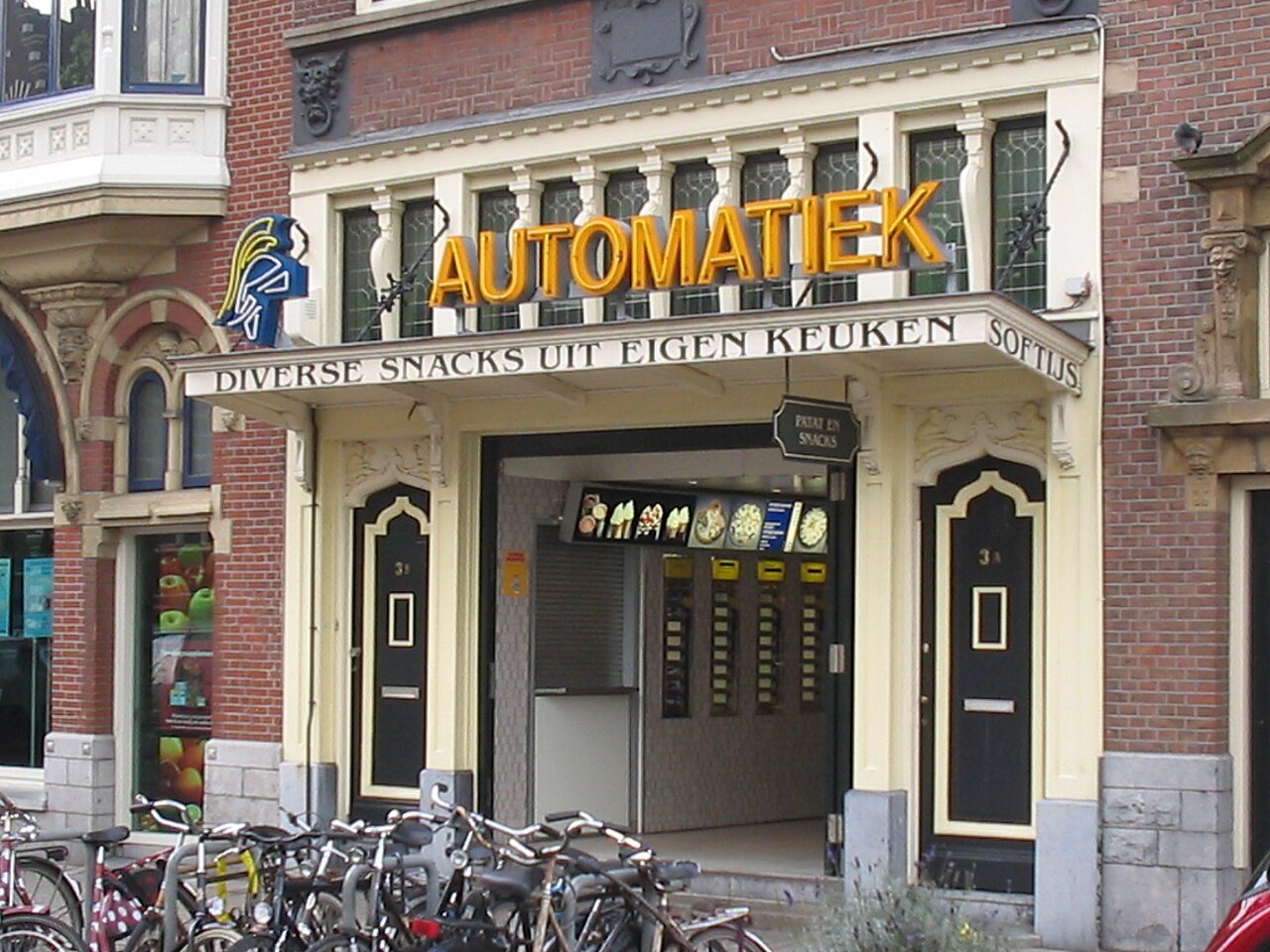
A Dutch automatiek with a wall of yellow-topped snack compartments behind an open storefront. Photo: M.Minderhoud, CC BY-SA 3.0, via Wikimedia Commons
If you want to buy food from a little glass door today, go to the Netherlands. Dutch snack walls, called automatieks, never went away. The best-known chain is FEBO, which takes its name from Ferdinand Bolstraat in Amsterdam, where it began. You put in your coins or tap a card and pull out a hot croquette, and the wall is refilled from a kitchen behind it, exactly as at Horn & Hardart.
Back in New York, people have tried to revive the concept more than once, and pickup lockers for app orders have brought a cousin of the idea back to some city counters. It isn't the same without the marble and the dolphin spouts, though.
For the full picture, look for Lisa Hurwitz's 2021 documentary The Automat, in which Mel Brooks and others remember the place with obvious love. Or find Abbott's photograph online at full size and zoom in on the price cards. Two nickels for a slice of pineapple pie still looks like the best deal ever offered in Manhattan.
Enjoyed this story?Get a new one every day on social.