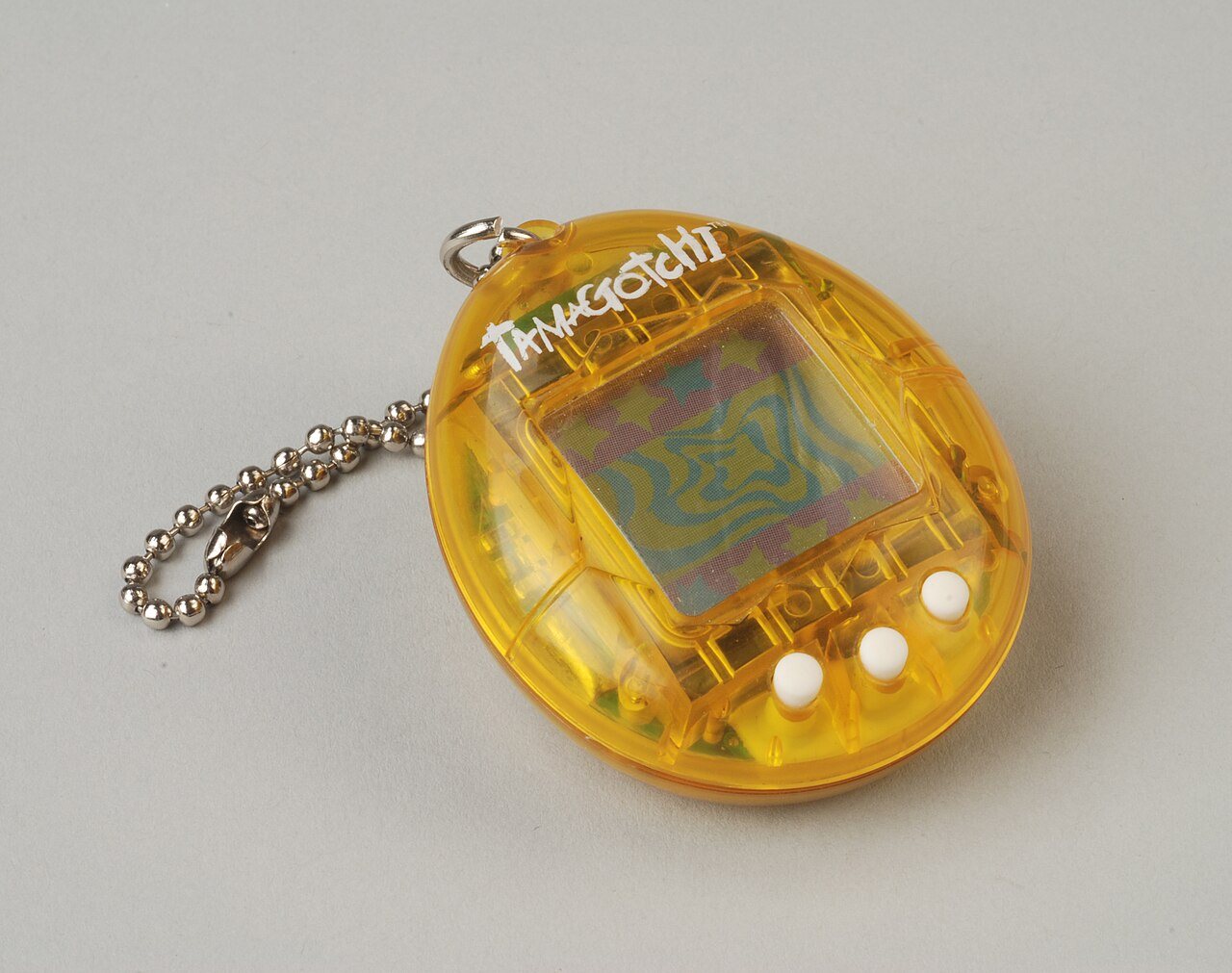
Photo: Museum Rotterdam, CC BY-SA 3.0, via Wikimedia Commons
On November 23, 1996, Bandai put a small plastic egg on sale in Japan. It had a black-and-white screen, three buttons and a blob of pixels living inside it, and the blob would die if you ignored it.
Thirty years later the Tamagotchi has sold a little over 98 million units by the most recent count, survived a collapse that left Bandai with a reported 6 billion yen loss, and collected an Ig Nobel Prize along the way. It is hard to explain to anyone under 35 why a beep from a classmate's pocket could derail a whole lesson. I'm going to try anyway.
A pet with no vet bills
Aki Maita was a 30-year-old office worker at Bandai when she had the idea, reportedly while watching television. She wanted a pet a child could look after anywhere, with none of the noise, mess or vet bills of the real thing. She developed it with Akihiro Yokoi, a toy designer at a company called WiZ, and the two of them came up with a back story to go with it. The creatures were aliens, and the egg was there to protect them from Earth's atmosphere.
Maita then handed a few hundred prototypes to high school girls in Shibuya and asked what they thought, which remains a better research method than most. Bandai aimed the toy at teenage girls first. Younger children, and their teachers, came later.
The name depends on whom you ask. Tamago means egg. The second half is either "uotchi" (watch) or "tomodachi" (friend), and both get repeated with total confidence. I lean toward watch, since the thing did have a clock in it.
One human year, every day
You set the clock, the egg wiggled for a few minutes, and something hatched. From then on it aged about a year per day. The three buttons covered feeding, playing, discipline and medicine, plus cleaning up its droppings, which is the part every former owner seems to remember. How you looked after it decided what it grew into, and the first model had seven possible adult characters. When it got sick a skull icon appeared on the screen.
A well-kept pet lasted about four weeks and died of old age around day 28. A neglected one in the first two generations could be gone in less than half a day, and that was what made the toy so annoying and so effective. Half a day is a school day. Your action figure did not mind being left in a drawer. The Tamagotchi minded a great deal, and it told you so in a thin electronic squeal.
Ten million eggs and a lot of confiscations
Bandai sold 400,000 of them in 1996. The toy reached the United States on May 1, 1997, at $17.99, and by that summer the worldwide total had passed 10 million. It was 13 million by October. By the spring of 1998 it was close to 40 million, split roughly evenly between Japan and everywhere else.
Schools were not amused. A pet that beeps for food will do so during fractions, and a child who hears it has stopped listening to you about fractions. Many schools banned them outright, partly over the distraction and partly because some kids got truly upset when the pet died. Rivals piled in, among them Tiger Electronics with Giga Pets and Playmates with Nano Pets, and Bandai itself followed up with Digimon.
In 1997 Maita and Yokoi shared the Ig Nobel Prize in economics, awarded for "diverting millions of person-hours of work into the husbandry of virtual pets." It may be the best one-line summary of that year anyone has written.
Grief, with a headstone
The Japanese version showed a ghost and a headstone when your pet died. English-language versions showed an angel, a softer ending that I suspect reflects what toy companies think of Western parents.
The feelings were real either way. Some teenagers held burials for their pets, and in 1998 a pet cemetery owner in southern England set aside a section for dead Tamagotchis and took in units mailed by owners from several countries. People laughed at this at the time, and I did see the joke. Still, a child who has spent weeks feeding something on a schedule is going to feel something when it stops moving, and that goes for a few million children at once.
The crash and the long comeback
The fad ended the way fads do, except that Bandai had made far too many. Customers had reserved units at several shops at once, which made demand look bigger than it was, and the company was left with unsold stock and that reported 6 billion yen loss in 1998.
The revival took its time. Tamagotchi Connection arrived in 2004 with infrared, so two pets could interact, and with quieter marketing than the first go-round. The first color model came out in Japan in 2008. Bandai reissued the original designs on November 23, 2017, for the 20th anniversary, and in July 2023 the Tamagotchi Uni brought Wi-Fi to the egg, a sentence that would have baffled a 1997 math teacher. Global sales doubled across 2022 and 2023, helped by millennials buying back their childhoods and by younger customers who had no childhood to buy back. A permanent shop opened in Tokyo in March 2024, with London and Madrid following, and Tamagotchi Paradise went on sale internationally in July 2025.
If there's one in your attic
Check the battery compartment first, gently, because anything left in there for decades may have corroded. Then check what you've actually got, since the 2017 reissues are not 1996 eggs.
As for money, don't plan on retiring. Mental Floss put most vintage units at around $50 on eBay, with rare editions such as the Yasashii Blue fetching $300 to $450. Those numbers move, so look at recently sold listings rather than asking prices. And if a fresh battery does bring it back to life, be warned that it will want feeding by lunchtime.
Enjoyed this story?Get a new one every day on social.