In 1941 Bismarck, Germany's “Unsinkable” Ship Ended Up on the Ocean Floor
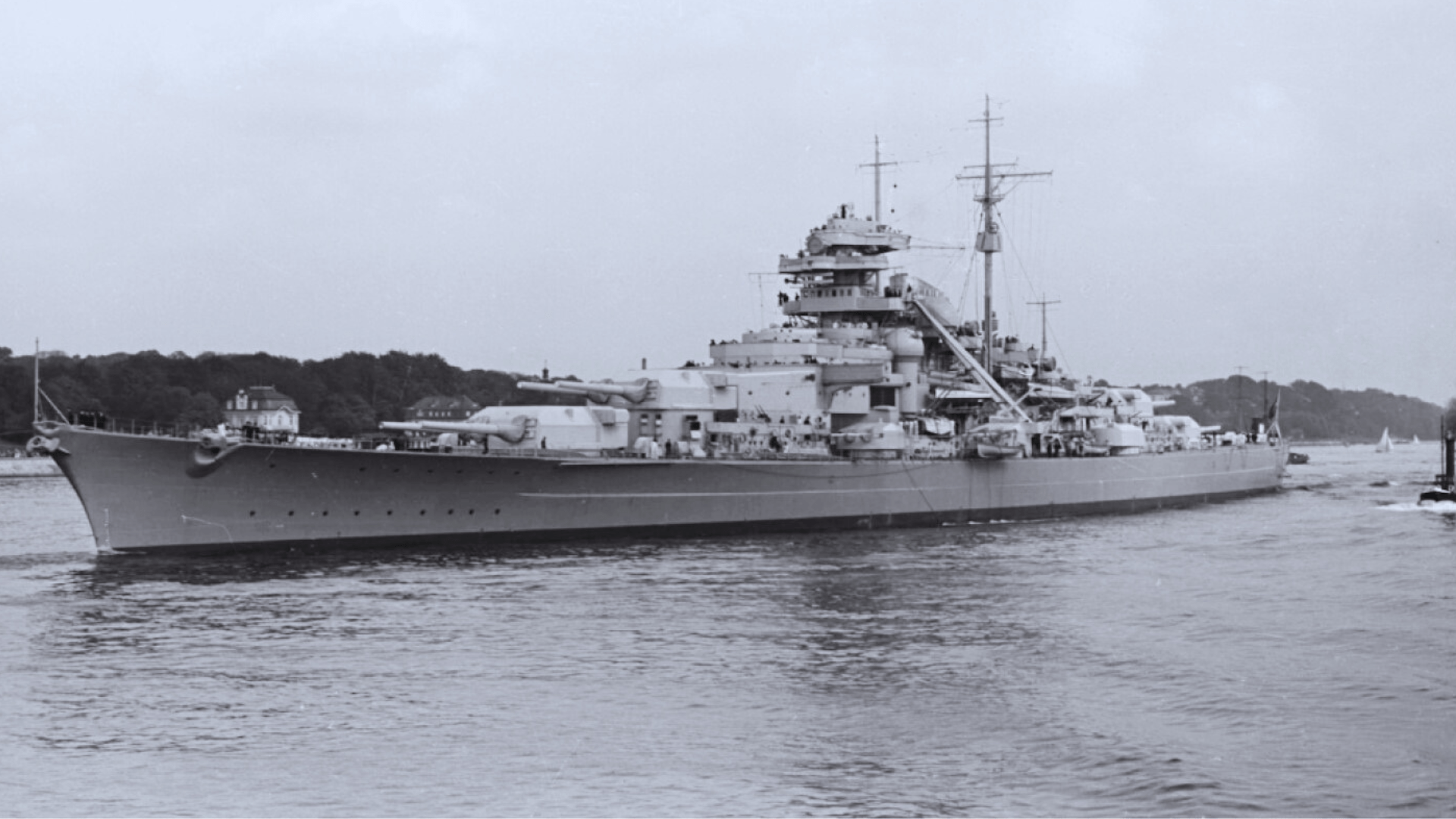
In the early hours of May 18, 1941, the Bismarck, a formidable German battleship with seemingly unrivaled might, silently sailed into the Baltic Sea, embarking on a journey that would go down in history.
This colossal ship, a demonstration of German naval prowess, made a significant splash in World War II naval warfare.
Bismarck Tasked with Disrupting U.S.-British Supply Route
Commissioned by the Kriegsmarine (Nazi navy), the Bismarck’s key task was to disrupt the critical supply route between the United States and Great Britain by cutting off the transAtlantic flow of munitions and food.
The German high command, confident in the Bismarck’s supposed invincibility, believed that its mere presence would compel Britain to surrender, since blocking their U.S. supplies could mean eventual starvation.
Why was the Bismarck Thought to be Unsinkable?
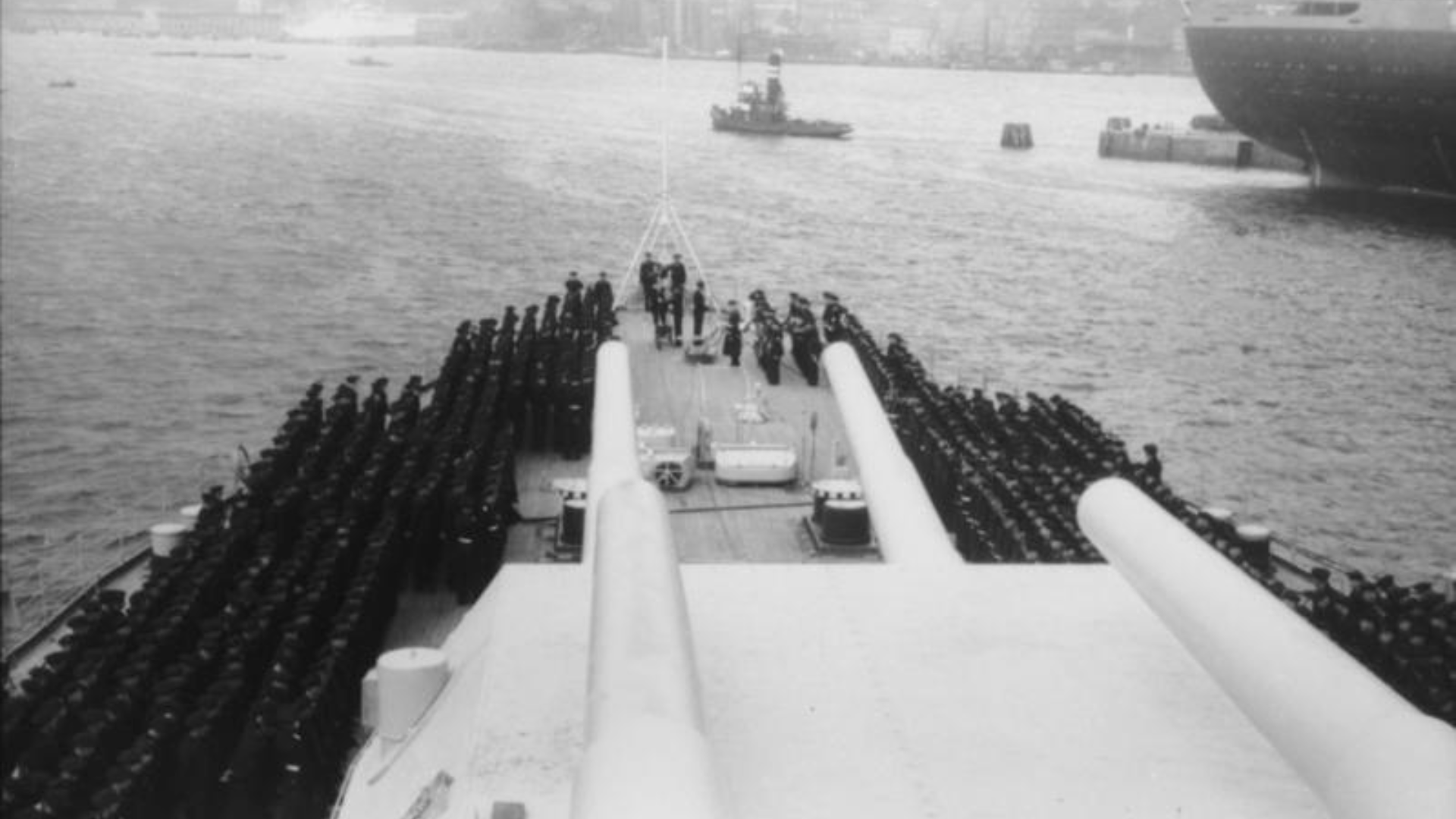
The Bismarck earned its nearly unsinkable status due to its immense size, measuring 821 feet and weighing over 50,000 tons. Armed with eight 15-inch guns, it possessed unmatched firepower, firing 1,800-pound armor-piercing projectiles up to 21.75 miles.
The battleship’s impressive speed of 30 knots, facilitated by 12 Wagner steam boilers, allowed it to outmaneuver pursuers. Its thick armor plating, capable of penetrating 16.5 inches of armor on enemy ships, contributed to its invincibility.
The Bismarck’s Final Voyage
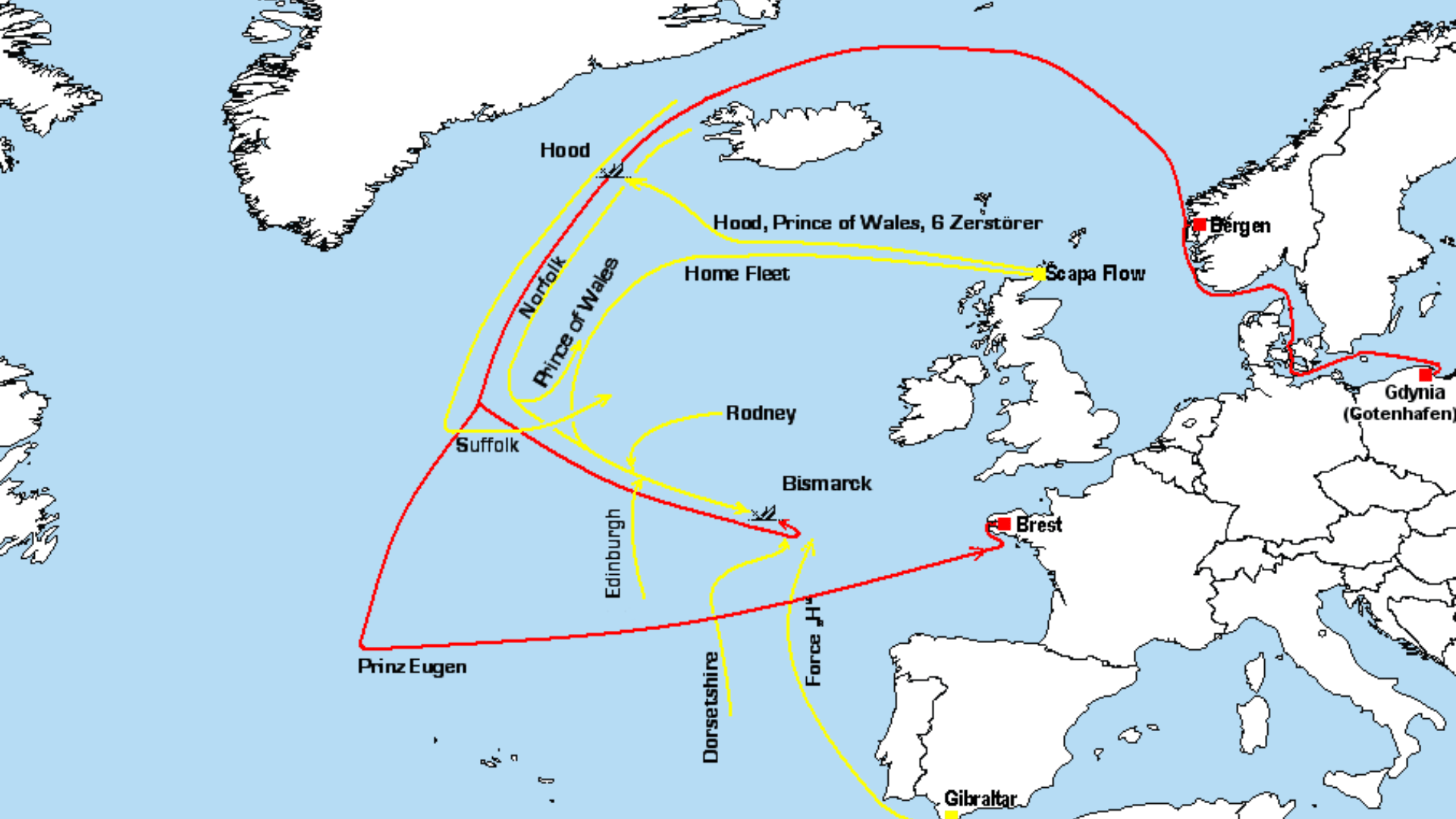
The Bismarck’s final, historic voyage began when the colossus of the seas set sail from Kiel in the Baltic on May 18 alongside the Prinz Eugen, a heavy cruiser.
Their mission was to break out into the Atlantic and pose a threat to British convoys. However, an air sighting near Bergen triggered a massive naval and air operation to thwart their plans.
Bismarck Encounter the Hood Battlecruiser in the Denmark Strait
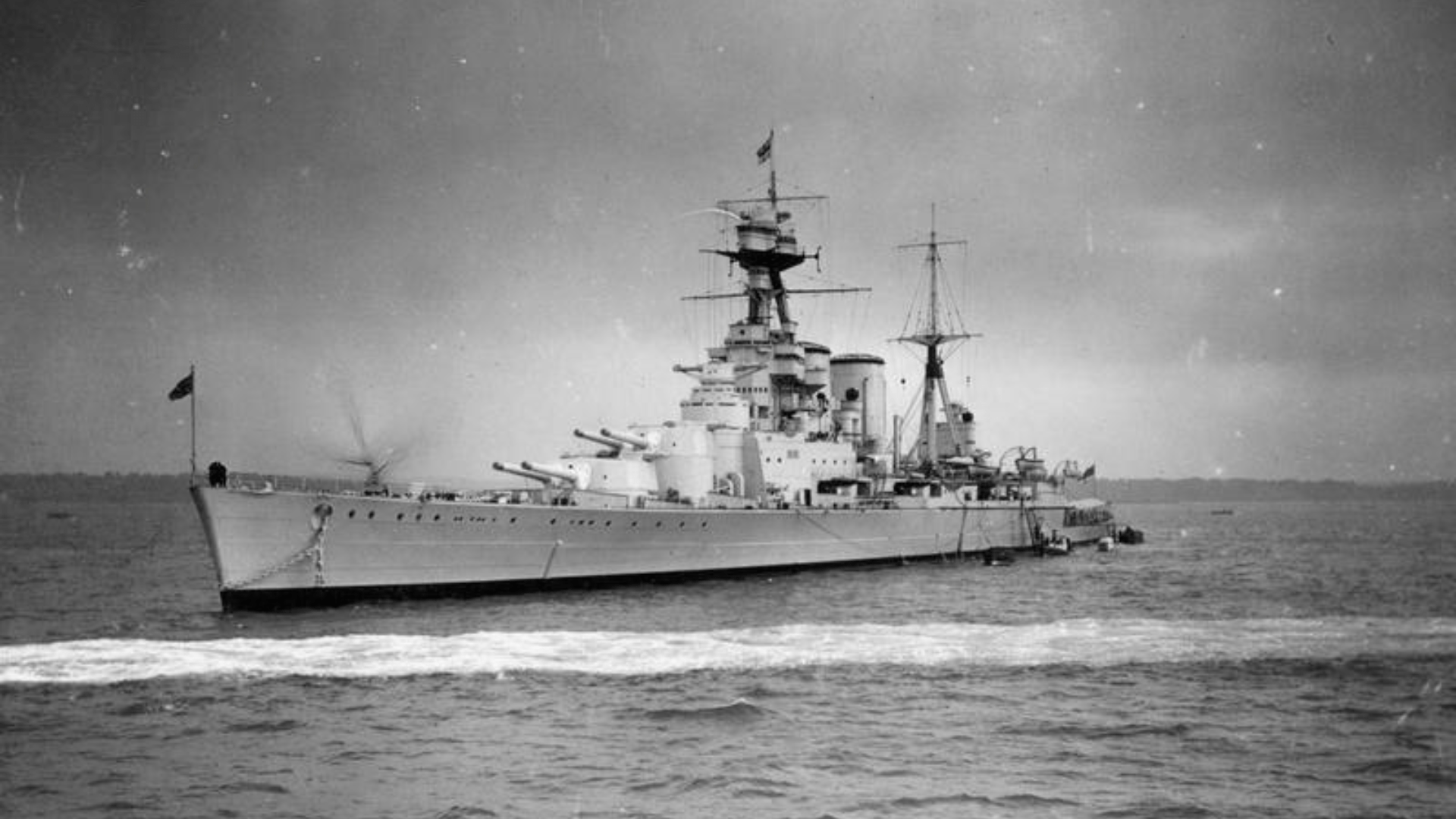
The turning point came in the Denmark Strait, situated between Iceland and Greenland, where the Bismarck and Prinz Eugen encountered the British battlecruiser Hood and the recently commissioned battleship Prince of Wales.
In the ensuing battle on May 24, the Hood tragically exploded, with the loss of almost all its crew, while the Prince of Wales sustained damage. The Bismarck was hit and critically lost access to a significant amount of fuel oil stored in a forward tank.
British Pursue the Bismarck and Attack in Mid-Ocean
The German ships then separated, with Prinz Eugen temporarily disappearing, and Bismarck making a beeline for the safety of Brest to address its fuel problem.
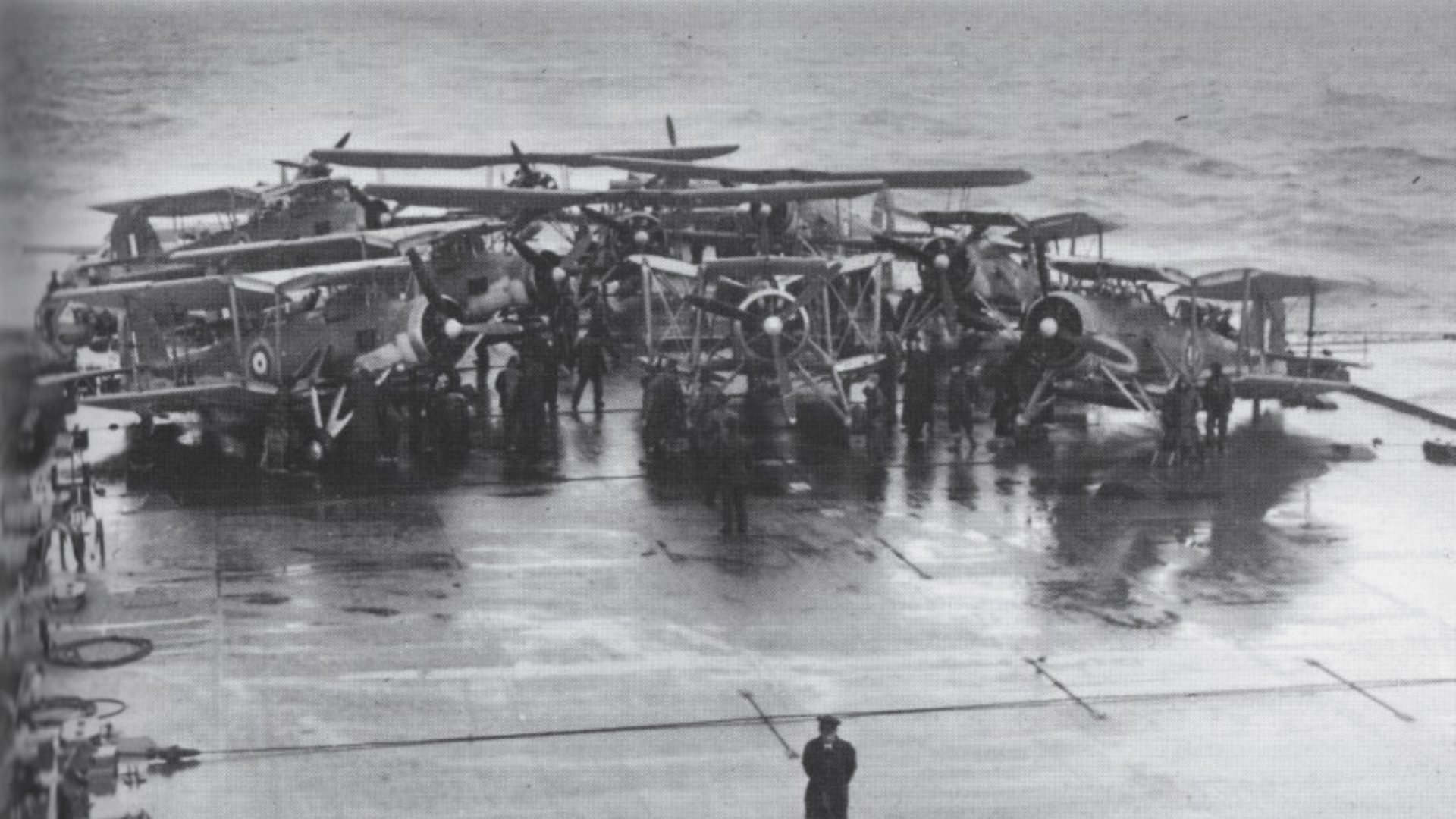
Resighted by the British on May 26, the Bismarck faced an air strike from the carrier Victorious, marking the first-ever carrier-borne aircraft attack against a capital ship in mid-ocean. Though the strike caused some damage, it did not hinder the Bismarck significantly.
British Home Fleet Reduces Bismarck to Burning Wreck
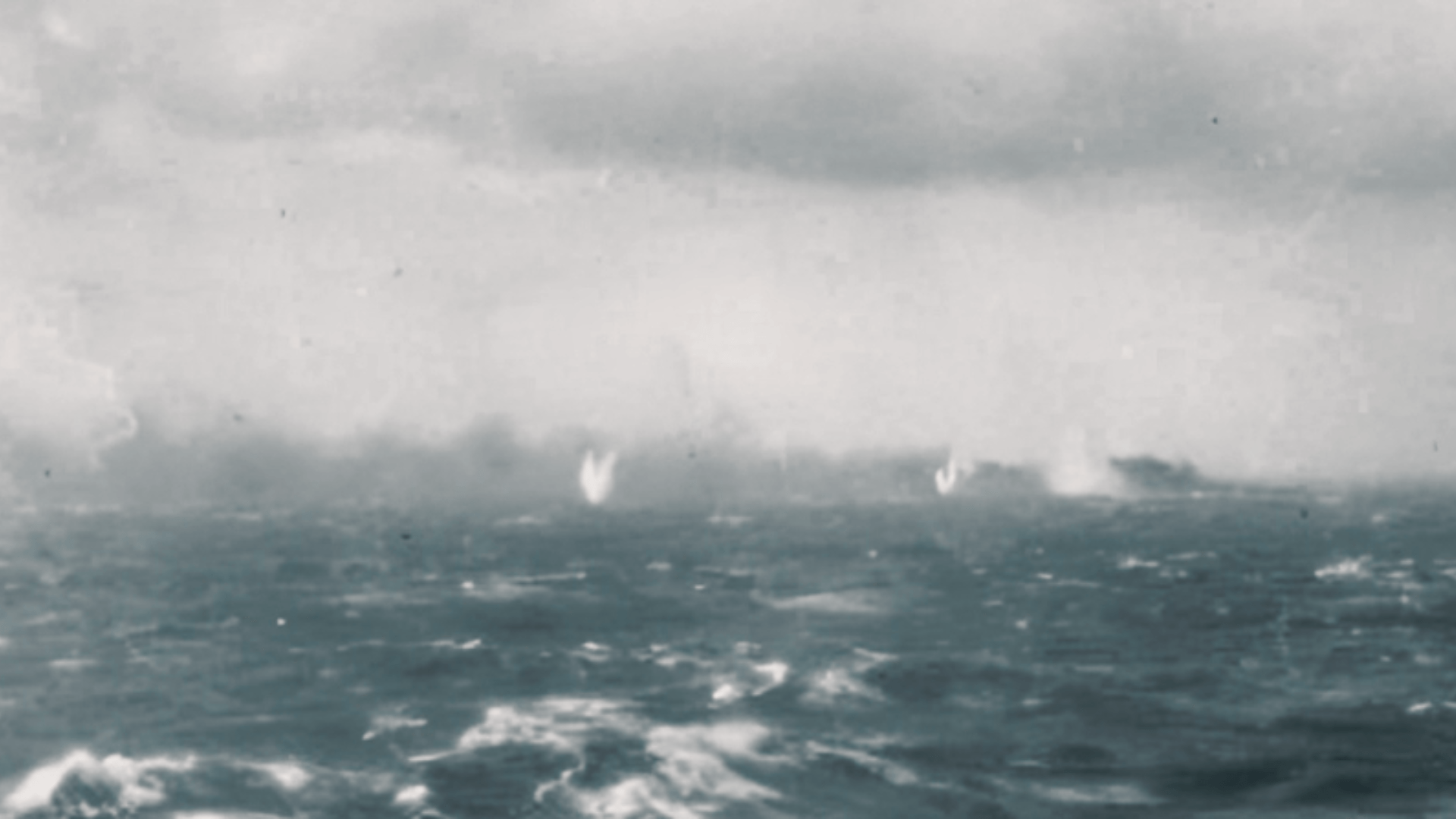
By May 27, the Bismarck, now limited to a speed of no more than seven knots due to jammed rudders, encountered the British Home Fleet, led by Admiral Sir John Tovey aboard the King George V, and joined by the battleship Rodney.
Despite being unmaneuverable, the Bismarck's formidable armament remained intact. In a fierce battle, the British fleet engaged the Bismarck, which ceased firing by 9:31 am. By 10:15 am, the once-mighty battleship had been reduced to a burning wreck.
Dorsetshire Finishes Off the Bismarck
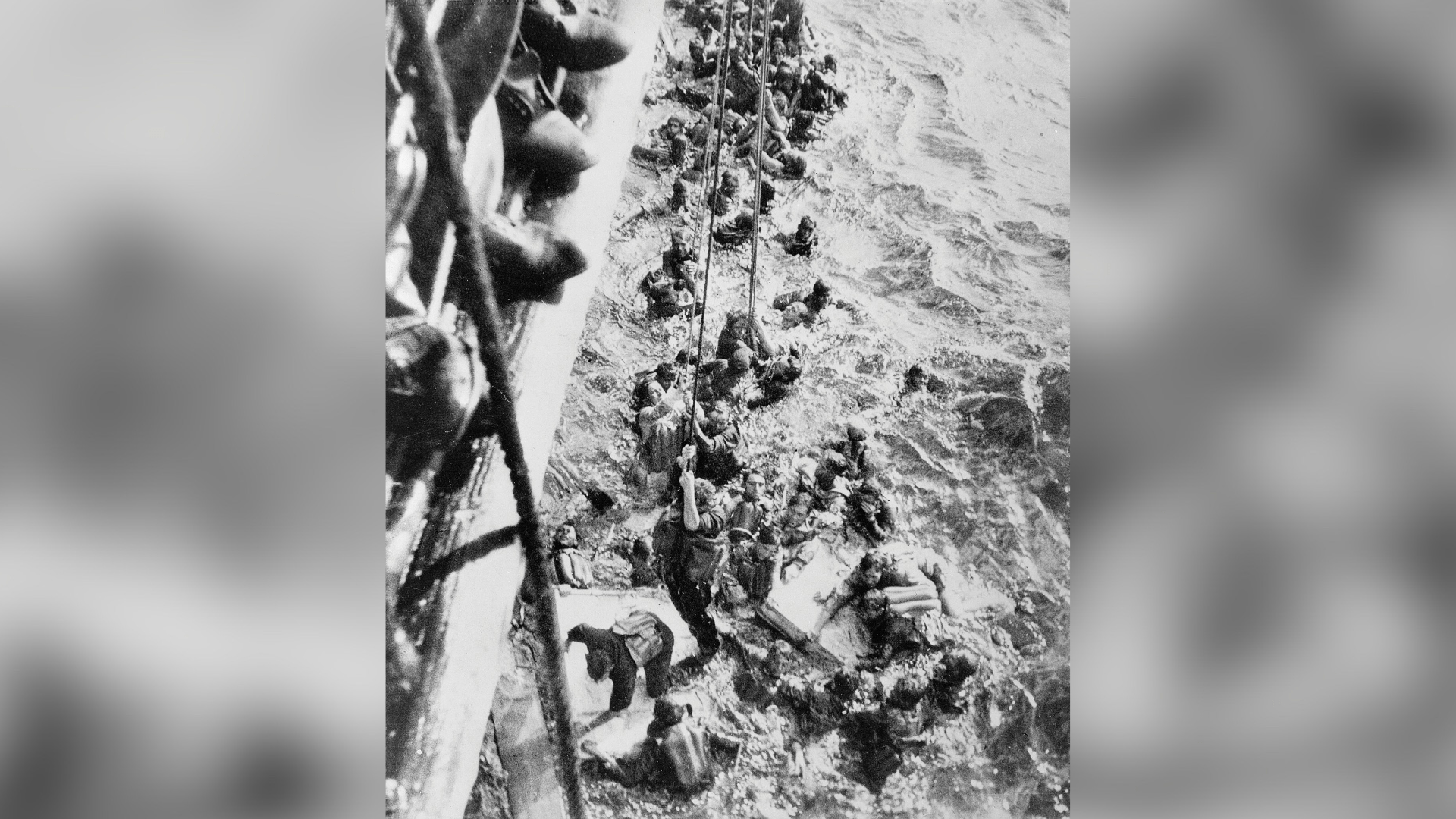
With the Bismarck incapacitated and short on fuel, Admiral Tovey turned for home, instructing the cruiser Dorsetshire to deliver the final blow with torpedoes.
Unfortunately, a false U-boat sighting (possibly an excuse to cover fear of attack) disrupted the rescue of survivors from the Bismarck, leading to only 110 individuals, along with the ship’s cat, being saved from the sinking ship.
Charles Turner’s Painting of the Bismarck
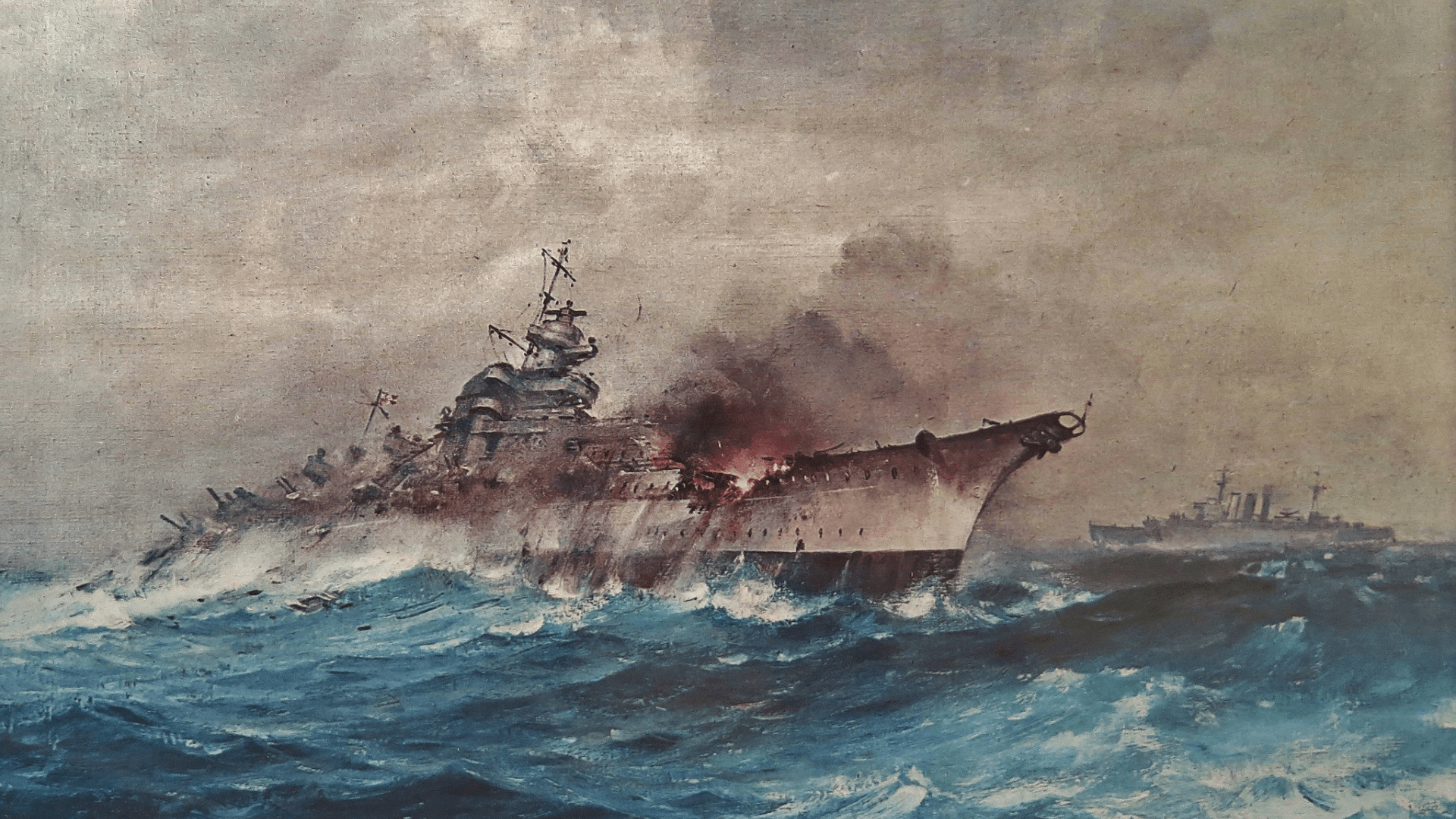
A renowned painting by Charles Edward Turner dramatically captures the Bismarck wallowing in the sea, listing to port with a massive hole in its forecastle emitting flames and smoke.
The Dorsetshire appears in the right-side background of the painting, presumably preparing to launch the deathblow torpedoes.
Who was Charles Edward Turner?

Charles Edward Turner was a prolific artist employed by journals such as the Illustrated London News and The Sphere.
His detailed and dramatic paintings, often featured as double-page spreads, aimed to convey the intensity of naval actions.
How Did Charles Turner’s Painting of the Bismarck Come About?
This particular painting was commissioned by Captain Sir Bruce Ingram, the managing editor and proprietor of the Illustrated London News, and presented to Royal Museums Greenwich in 1945.
Ingram’s gesture showcased his support for the museum, although he typically expressed his generosity in different forms. The painting, signed ‘C E Turner,’ remains an important historical artifact, providing a vivid portrayal of the Bismarck’s final moments.
The Relentless Naval Warfare of World War II
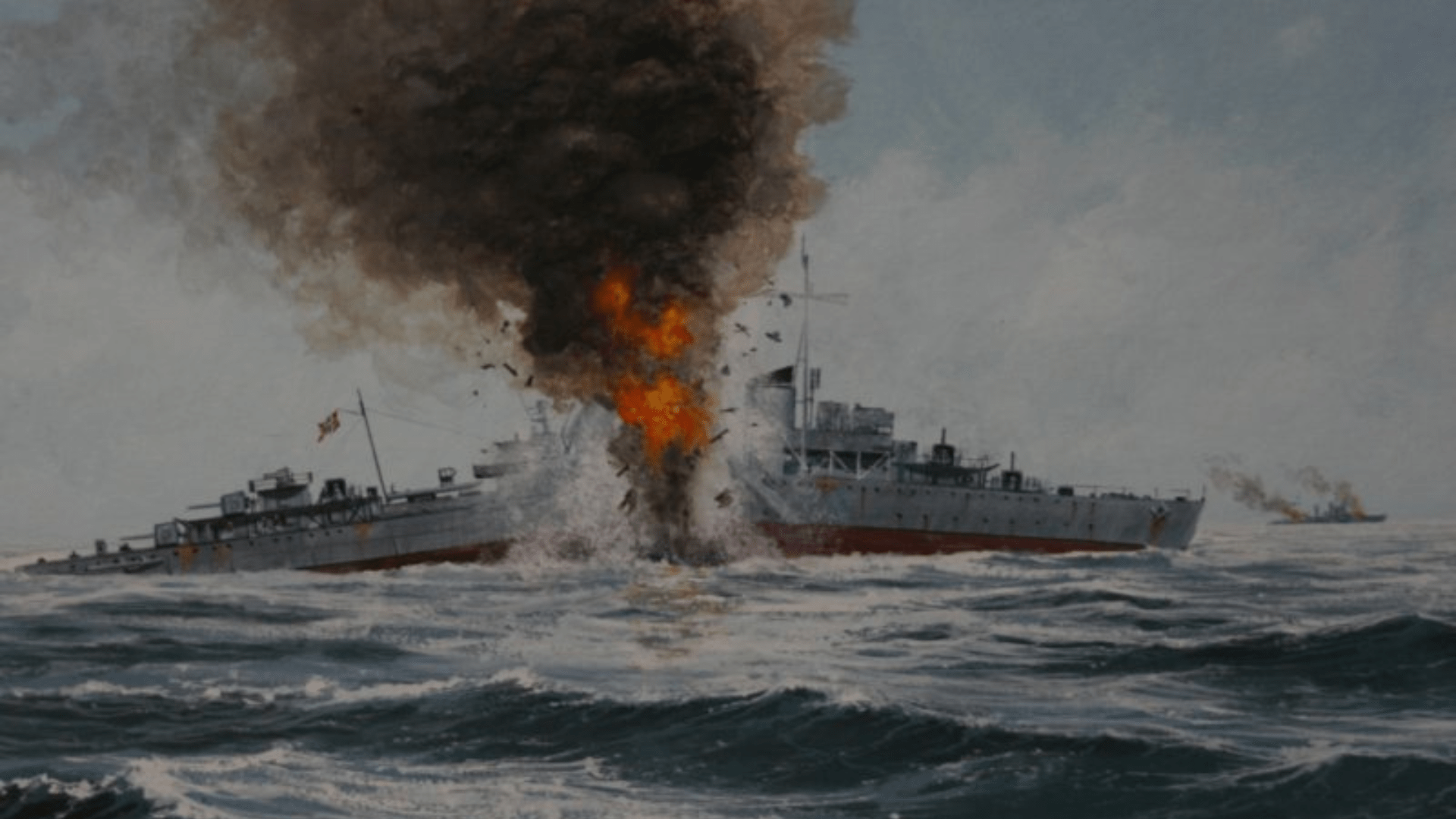
The sinking of the Bismarck stands as a symbol of the relentless naval warfare that characterized World War II.
The events surrounding its final voyage spotlight the strategic importance of controlling key maritime routes and the profound impact that naval engagements had on the course of the war. The legacy of the Bismarck endures as both an example of human hubris and the power of Britain’s collective persistence.