Photo: Mathew Benjamin Brady / Levin Corbin Handy, public domain, via Wikimedia Commons
Six days before the end, the Brazilian empire threw a party. On November 9, 1889, the government held a grand ball on Ilha Fiscal, a little neo-Gothic customs house on an island in Guanabara Bay, to honor the officers of a visiting Chilean warship. Thousands of guests came out by boat. It went down in Brazilian memory as the last ball of the empire, which is the kind of title nobody wants for their party.
On the morning of November 15, Marshal Manuel Deodoro da Fonseca rode into central Rio de Janeiro at the head of army units and forced out the cabinet of the Viscount of Ouro Preto. Deodoro was in his sixties and so unwell that he had been in bed the night before. By the end of the day Brazil was a republic. Two days after that, Emperor Pedro II and his family were on a ship to Europe.
There was almost no fighting. That is the strangest part of the story, and also the part that explains the most about it.
An emperor who had been on the throne for 58 years
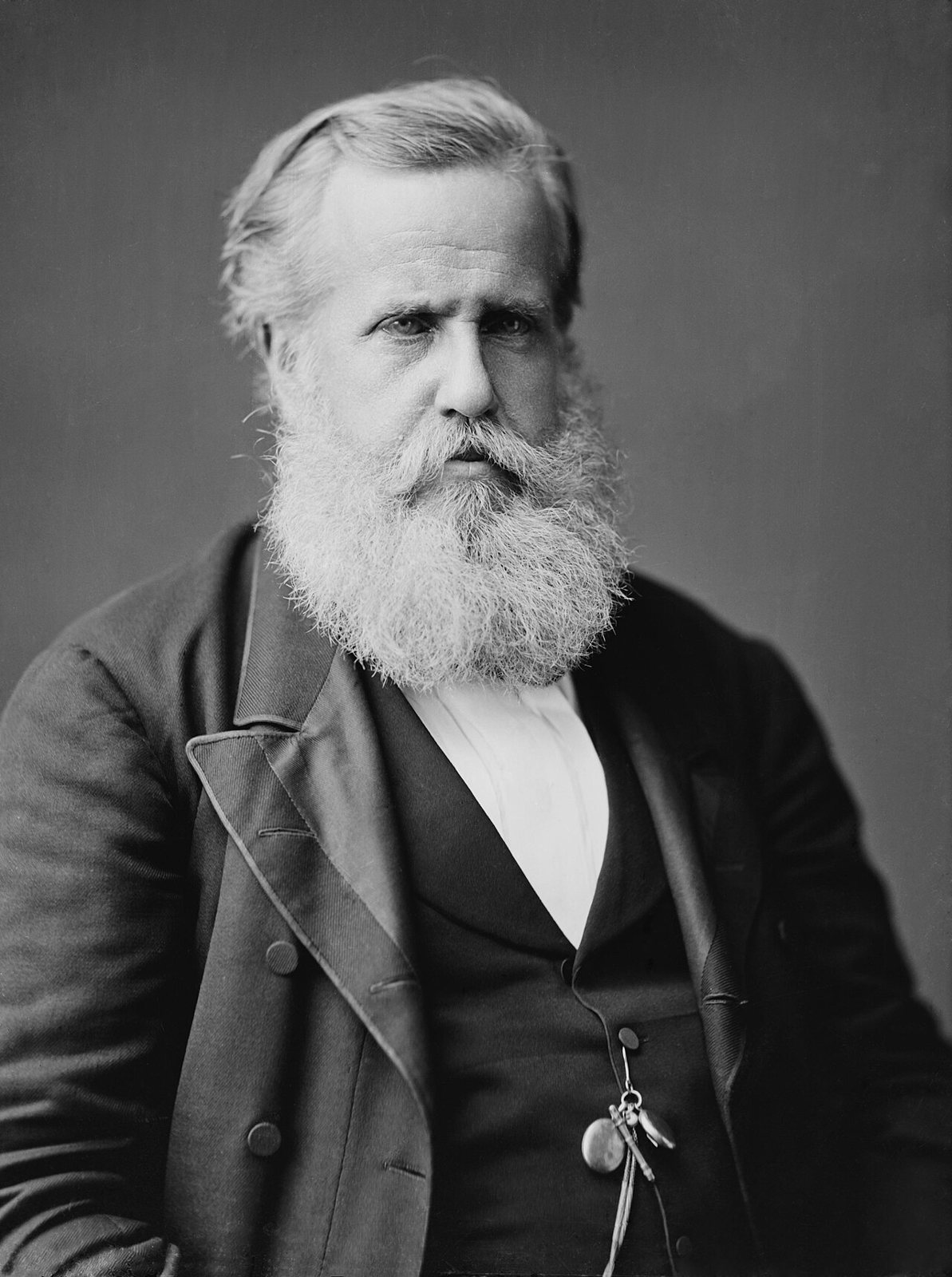
Pedro II became emperor in 1831, when he was five years old and his father abdicated and sailed back to Portugal. He was declared of age in 1840, at fourteen, and then ruled for nearly half a century. By most accounts he was a decent and curious man. He corresponded with scientists, spoke several languages, and was far happier at a lecture than at a military parade.
That last trait mattered. Brazil had fought a long and bloody war against Paraguay from 1864 to 1870, and the army came out of it larger, prouder and convinced that the civilian politicians in Rio did not respect it. Through the 1880s officers clashed with the government over discipline and their right to speak out in public, a series of rows Brazilian historians call the Military Question. Meanwhile a Republican Party had existed since 1870, and at the military academy a mathematics teacher named Benjamin Constant Botelho de Magalhães was teaching young officers positivism, Auguste Comte's philosophy of order, science and progress, with a strong republican streak.
The emperor was also aging and diabetic, and his heir was his daughter, Princess Isabel. Plenty of people in the elite were uneasy about a woman on the throne, and about her French husband, the Count of Eu, who was not popular.
The Golden Law and the planters' revenge
The other half of the explanation is slavery. Brazil was the last country in the Americas to abolish it. On May 13, 1888, with her father away in Europe for medical treatment, Isabel signed the Lei Áurea, the Golden Law, freeing every enslaved person in the country at once and without any compensation to their owners.
It was a huge and overdue act, and crowds celebrated in the streets. It also cost the monarchy the coffee and sugar planters, who had been among its most loyal supporters. Some of them simply switched sides. Brazilians even had a name for them, the "republicans of May 14," people who discovered their love of republican government the day after they lost their human property. I find it hard to think of a more honest label in all of political history.
What actually happened on November 15
The day itself was murkier than the textbooks make it look. Rumors spread on the 14th that the government planned to arrest Deodoro and break up army units, and that was enough to push him into action. When he confronted the ministers at army headquarters that morning, it is still debated whether he meant to overthrow the monarchy or only to get rid of Ouro Preto, an old rival. Several historians think he made up his mind over the course of the day, with republican conspirators pushing hard.
In the afternoon, the journalist and abolitionist José do Patrocínio went to Rio's municipal council and declared the republic there. That night a provisional government issued its first decree, making Brazil a federal republic, with Deodoro at its head.
Most people in the city seem to have had little idea what was going on. The republican journalist Aristides Lobo wrote that the population watched the whole thing "bestialized," stunned, many of them thinking they were seeing a military parade. Coming from a supporter of the new regime, that is quite an admission.
Two days to pack
Pedro II was at his summer palace in Petrópolis, up in the hills, when the trouble started. He came down to Rio, and by the time he understood how far things had gone there was no one with troops willing to defend him, and he did not try to raise any. The provisional government told the family they had to leave. Before dawn on November 17 they were taken aboard and sailed for Portugal.
The exile was short and sad. Empress Teresa Cristina died in Porto at the end of December 1889. Pedro II died in a Paris hotel in December 1891. The banishment law was lifted in 1920, the couple's remains were brought home the following year, and they now lie in the cathedral at Petrópolis, the town that still feels more imperial than anywhere else in Brazil.
The flag, the motto and a very old marshal
On November 19 the new government adopted the flag Brazil still flies: the green field and yellow diamond kept from the empire, with a blue globe of stars and the words "Ordem e Progresso," Order and Progress, straight out of Comte. It is probably the only national flag that carries a slogan from a nineteenth century French philosopher. (Positivists were extremely pleased with themselves.)
Deodoro became the first president, chosen by Congress in 1891, and lasted less than a year before he was forced to resign. His vice president, Marshal Floriano Peixoto, took over and ruled with a heavy hand. The republic's first decade was anything but calm, and it is fair to say the army never quite got out of the habit it learned that November.
Brazil still marks the day, and once voted on it
November 15 is a national holiday in Brazil, Proclamação da República, and today is the 137th anniversary. Expect parades, a day off, and very little discussion of the ball on Ilha Fiscal, which now houses a small museum and can be visited by boat from central Rio.
The question did not quite die in 1889, either. In 1993, under the new constitution, Brazilians were asked in a plebiscite whether they wanted a republic or a monarchy. The republic won comfortably, with about two thirds of the vote, while the monarchy took roughly ten percent. Pedro II's descendants are still around and still use their titles, but the decision this time was made by voters, which is more than anyone asked them in 1889.
Enjoyed this story?Get a new one every day on social.